Monday, September 24, 2012

World T20 India vs England scoreboard

Zimbabwe News.Net Sunday 23rd September, 2012

The following is the scoreboard of the World Twenty20 Group A match between India and England here at the R Premadasa Stadium here Sunday.

India:

Gautam Gambhir c Kieswetter b Finn 45

Irfan Pathan b Finn 8

Virat Kohli c Bairstow b Swann 40

Rohit Sharma not out 55

Mahendra Singh Dhoni c Hales b Dernbach 9

Suresh Raina not out 1

Extras (b 1, lb 3, w 8) 12

Total (four wickets in 20 overs) 170

Fall of wickets: 1-24 (Pathan, 2.4 overs), 2-81 (Kohli, 10.3), 3-119 (Gambhir, 15.5), 4-166 (Dhoni, 19.4)

Bowling:

Steve Finn 4-0-33-2

Jade Dernbach 4-0-45-1

Stuart Broad 4-0-36-0

Tim Bresnan 4-0-35-0

Graeme Swann 4-0-17-1

England:

Craig Kieswetter c Kohli b Chawla 35

Alex Hales b Pathan 0

Luke Wright lbw b Pathan 6

Eoin Morgan b Harbhajan Singh 2

Jonny Bairstow b Chawla 1

Jos Buttler b Harbhajan Singh 11

Tim Bresnan c Gambhir b Harbhajan Singh 1

Stuart Broad c Gambhir b Dinda 3

Graeme Swann st Dhoni b Harbhajan Singh 0

Steve Finn not out 8

Jade Dernbach run out (Balaji) 12

Extras (w 1) 1

Total (all out in 14.4 overs) 80

Fall of wickets: 1-2 (Hales, 0.6 overs), 2-18 (Wright, 2.4), 3-39 (Morgan, 5.2), 4-42 (Bairstow, 6.6), 5-51 (Kieswetter, 8.1), 6-54 (Bresnan, 9.6), 7-60 (Buttler, 11.1), 8-60 (Swann, 11.4), 9-60 (Broad, 12.1), 10-80 (Dernbach, 14.4)

Bowling:

Irfan Pathan 3-0-17-2

Lakshmipathy Balaji 1-0-10-0

Ashok Dinda 2-0-26-1

Harbhajan Singh 4-2-12-4

Piyush Chawla 4-1-13-2

Yuvraj Singh 0.4-0-2-0

Toss: England chose to field

Player of the match: Harbhajan Singh (India)

Umpires: Aleem Dar (Pakistan) and Simon Taufel (Australia)

TV umpire: Kumar Dharmasena (Sri Lanka)

Match referee R.S. Madugalle

Reserve umpire: Asad Rauf (Pakistan)

Source: http://www.zimbabwenews.net/index.php/sid/209432483/scat/9d7afd9766a94f28

sasquatch david choe national wear red day gunner kiel gunner kiel groundhog soulja boy

Sunday, September 23, 2012

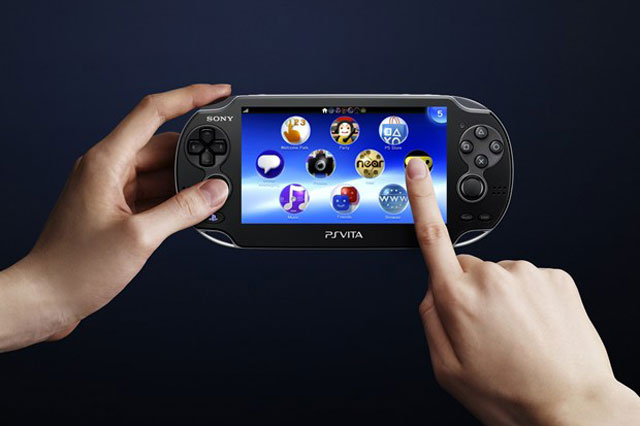
Q&A: How Sony simultaneously develops the same game for PS3 and Vita

Shuhei Yoshida is the president of Sony's worldwide PlayStation software development and oversees all Sony's game studios, from Japan to the US. He has worked at Sony for over 25 years and was a lead executive on the original PlayStation project. I travelled to Tokyo to meet him at his office to find out the processes and challenges of developing games that appear on the PlayStation 3 console and the portable PS Vita system.

What is the process for developing a game that is to be released on PlayStation 3 and PS Vita? Are they separate teams?

We do not have a set process. Some of the games we start as a PS3 title and add in a Vita [version] during development. Some other projects are started as Vita titles and a PS3 [version] is added later. For newer titles, we start both from the beginning. It's different for every title.

The performance is quite similar [for PS3 and Vita] unless you're making something like Uncharted or The Last Of Us, which take every bit of [hardware] performance available. The Vita's smaller screen size allows developers to economize on textures and the level of detail so that it can be played on the Vita. Plus sharing the core gaming engine makes it really easy for developers to enable cross-platform play.

What's the development time like for the average Vita game? How does it compare to developing for the PlayStation?

It's about the same time. Moving one title from PS3 to Vita, depending on the title, takes a couple of months. The additional cost and time involved in having two [versions] is not really that significant because of the similarity of the systems.

Are they different teams that work on each version of the same game?

The idea is that the same developer works on both [versions]. They have the perfect control. But when the developer of, say, the PS3 version does not have any more resources available to do the Vita version, we help find the team that are more specialized in making games for the Vita.

For PlayStation All-Stars Battle Royale, it's SuperBot Entertainment that's making the PS3 version and Bluepoint Games is doing the Vita version. Because it's a fighting game, and because control and responsiveness is crucial?especially when you want cross-platform play?[both teams] work very closely together.

What made you decide to start making games that worked across both the Vita and PS3?

A lot of the ideas came from the developers but we were not sure how people would react. In the past we had this unwritten rule that games had to be made for one platform, but now people are embracing the idea of having the same game across different devices.

So you believe gamers now expect a game they buy to be available on both PS3 and Vita?

Yes. More and more people expect and like that functionality. Going forward we should be more aggressive about looking at titles for which this makes sense, such as those with multiplayer functions or user-generated content functions like LittleBigPlanet.

Is 3D something you would be interested in doing with glasses on the Vita?

When it comes to the screen technology, the OLED screen is really brilliant at avoiding interference?we tried our [stereoscopic 3D] PS3 games on the Sony OLED TV in the past and it looked beautiful. So it's interesting. We haven't really tried it on the Vita, but never say never.

What Vita games are you most looking forward to releasing?

LittleBigPlanet. I started downloading what users were creating for it and it's already very interesting. There's something about the 2D action platformer works really well with portable. But also PlayStation All-Stars Battle Royale, especially the online play so I can play with other people over the internet. After that, Soul Sacrifice.

Any games from other developers you're looking forward to playing?

Borderlands 2. I haven't got my copy so I'm considering buying it from the US. I was a big fan of Borderlands, the first game, and what I've read is that everything about that game has improved so I'm super excited about it.

Thank you, Yoshida-san!

Source: http://feeds.arstechnica.com/~r/arstechnica/news/~3/Lny3H722kYk/

mardi gras 2012 the secret world of arrietty cee lo allen iverson jr smith chris anderson rondo suspended

Squeeze light 'till it hurts' on a quantum scale: Researchers push the boundaries on ultra-precise measurement

ScienceDaily (Sep. 21, 2012) ? An international team of physicists has pushed the boundaries on ultra-precise measurement by harnessing quantum light waves in a new way.

It is one thing to be able to measure spectacularly small distances using "squeezed" light, but it is now possible to do this even while the target is moving around.

An Australian-Japanese research collaboration made the breakthrough in an experiment conducted at the University of Tokyo, the results of which have been published in an article, "Quantum-enhanced optical phase tracking" in the journal Science.

Leader of the international theoretical team Professor Howard Wiseman, from Griffith University's Centre for Quantum Dynamics (pictured), said this more precise technique for motion tracking will have many applications in a world which is constantly seeking smaller, better and faster technology.

"At the heart of all scientific endeavour is the necessity to be able to measure things precisely," Professor Wiseman said.

"Because the phase of a light beam changes whenever it passes through or bounces off an object, being able to measure that change is a very powerful tool."

"By using squeezed light we have broken the standard limits for precision phase tracking, making a fundamental contribution to science," he said. "But we have also shown that too much squeezing can actually hurt."

Dr Dominic Berry from Macquarie University has been collaborating with Professor Wiseman on the theory of this problem for many years.

"The key to this experiment has been to combine "phase squeezing" of light waves with feedback control to track a moving phase better than previously possible," Dr Berry said.

"Ultra-precise quantum-enhanced measurement has been done before, but only with very small phase changes. Now we have shown we can track large phase changes as well," he said.

Professor Elanor Huntington from UNSW Canberra, who directed the Australian experimental contribution, is a colleague of Professor Wiseman in the Centre for Quantum Computation and Communication Technology.

"By using quantum states of light we made a more precise measurement than is possible through the conventional techniques using laser beams of the same intensity," Professor Huntington said.

"Curiously, we found that it is possible to have too much of a good thing. Squeezing beyond a certain point actually degrades the performance of the measurement, making it less precise than if we had used light with no squeezing."

Share this story on Facebook, Twitter, and Google:

Other social bookmarking and sharing tools:


Story Source:

The above story is reprinted from materials provided by Griffith University.

Note: Materials may be edited for content and length. For further information, please contact the source cited above.


Journal Reference:

  1. H. Yonezawa, D. Nakane, T. A. Wheatley, K. Iwasawa, S. Takeda, H. Arao, K. Ohki, K. Tsumura, D. W. Berry, T. C. Ralph, H. M. Wiseman, E. H. Huntington, A. Furusawa. Quantum-Enhanced Optical-Phase Tracking. Science, 2012; 337 (6101): 1514 DOI: 10.1126/science.1225258

Note: If no author is given, the source is cited instead.

Disclaimer: Views expressed in this article do not necessarily reflect those of ScienceDaily or its staff.

Source: http://feeds.sciencedaily.com/~r/sciencedaily/top_news/top_science/~3/lJZAZH5YN5I/120921083542.htm

all star game oscar red carpet daytona 500 start time ryan zimmerman oscars red carpet jennifer lopez wardrobe malfunction hugo

Green Day?s Billie Joe Armstrong?s Music Festival Rant (Video)\

Billie Joe Armstrong of Green Day had some ranting words for fans attending the iHeartRadio music festival on Friday. He was none to pleased with what went down at the festival he wasn’t afraid to speak his mind about it. According to GossipCop when Armstrong learned that Green Day’s time was cut short it set him off. The lead singer went on a serious rant. It all begin when a sign alerted the band that they only had one minute left to finish up their set. As soon as he saw the sign Armstrong immediately stopped singing, mid song and began to go on a tirade. He wasn’t letting anyone shut him up that is for sure. You can of course see the video of his moment that actually ends with the band destroying a guitar on stage below. I highly recommend that you watch it because it wil totally leave you wondering WTF. Let me just say this little bit to you, Billie Joe uses a number of shall we say not so nice words,?explicit words if you know what I mean. He even goes as far as to make a Justin Bieber reference, which I personally didn’t find [...]

Source: http://feedproxy.google.com/~r/RightCelebrity/~3/rj73AOeeDiY/

Eric Idle rory mcilroy Fatboy Slim Rio de Janeiro Shark Week London 2012 closing ceremony Shark Week 2012

Saturday, September 22, 2012

Panetta: US surge troops out of Afghanistan

AUCKLAND, New Zealand (AP) ? Nearly two years after President Barack Obama ordered 33,000 more U.S. troops to Afghanistan to tamp down the escalating Taliban violence, the last of those surge troops have left the country, U.S. Defense Secretary Leon Panetta said Friday.

Panetta said the "surge did accomplish it objectives of reversing the Taliban momentum on the battlefield and dramatically increase the size and capability of the Afghan national security forces."

Calling it a "very important milestone," Panetta said he believes the U.S. is on track to accomplish its goals in Afghanistan.

Panetta said the top U.S. commander in Afghanistan, Gen. John Allen, "is saying that the force he has put in place is sufficient to accomplish that mission."

The withdrawal, which leaves 68,000 American forces in the war zone, comes as the security transition to Afghan forces is in trouble, threatened by a spike in so-called insider attacks in which Afghan Army and police troops, or insurgents dressed in their uniforms, have been attacking and killing U.S. and NATO forces.

And it's called into question the core strategy that relies on NATO troops working shoulder to shoulder with Afghans, training them to take over the security of their own country so the U.S. and its allies can leave at the end of 2014 as planned.

The number of U.S. forces there peaked at about 101,000 last year, and they have been coming out slowly over the past several months.

The surge was aimed at beating back the Taliban to give the Afghan government and its security forces the time and space to take hold. The key goal was to ensure that the Taliban did not regain a foothold in the country that could allow it once again to become a safe haven for terror groups. And there was hope that Taliban members would be willing to come to the peace table.

Military commanders say they have made broad gains against the Taliban, wresting control of areas where the insurgents once had strong footholds. And Panetta has characterized the insider attacks as the last gasp of a desperate insurgency.

But other top military leaders, including U.S. Gen. Martin Dempsey, chairman of the Joint Chiefs of Staff, are worried about the impact of the attacks on the troops. Dempsey called them a "very serious threat" to the war campaign and has declared that "something has to change."

Source: http://news.yahoo.com/panetta-us-surge-troops-afghanistan-040027801.html

seattle weather skier sarah burke gingrich wife cheryl burke sarah burke mega upload santorum wins iowa

How video game assists the visually impaired

2 hrs.

There are two things?that make optometrist and neuroscientist Lotfi Merabet's new computer game unusual: The various rooms and corridors in the game exactly mirror a real place, and players aren't able to navigate by looking at graphics on-screen. Instead, players must rely entirely on different sounds that tell them where doors, walls, jewels and monsters lay in wait.

Merabet and his colleagues at Harvard Medical School and the University of Chile designed the game for ? and tested the game with ? visually impaired people.?

And they found something interesting about their players when they later took the gamers to the real building on which the game was based. Although the researchers hadn't told the study participants to remember the game's layout, they found that those who played the game excelled at independently navigating the real building.

The researchers' study shows the promise of audio maps helping to solve a real problem for the blind, said Gordon Legge, who directs the Laboratory for Low-Vision Research at the University of Minnesota, is visually impaired, and was not involved in Merabet's study.?

"People who are visually impaired are often anxious about going to new places. That's a big issue," Legge said. "If there were software methods to explore and learn a place before they go, it could be quite advantageous." [10 Profound Innovations Ahead]

The study also hints at the possibilities of using audio games to teach visually impaired people in a way that sticks better than other methods, including a guided tour of the computer game's layout, which Merabet also studied.

"Gaming sort of gives you a problem-solving sense that you don't have through directed navigation," said Merabet, who runs studies and sees patients at Harvard's Massachusetts Ear and Eye Infirmary.

Although there are still important software problems to resolve, in the future, major buildings might be able to offer audio maps or games to help visually impaired visitors prepare before they get there.

From game to real life
Starting last year, Merabet began testing his game on people aged 15 to 45 who had been blind since birth. Players wore headphones while they played the game and navigated by pressing keys on a keyboard. Whenever their avatars touched walls or doors, they heard characteristic sounds. A knock in the left ear meant a door to the left; a knock on the right, a door to the right. Knocking in both ears indicated a door in front. "The best way for you to get a sense of that room is by feeling around," Merabet said. [Video Game Improves Vision for Adults Born with Cataracts]

He told his study participants they were supposed to collect jewels hidden in the game's rooms, while avoiding monsters that would steal the jewels. Both the gems and monsters emitted sounds that increased in volume as the game players approached them ? or as they approached the players. He didn't say anything about remembering the map, nor did he mention that the rooms' layout was exactly the same as the two-story, 23-room Carroll Center for the Blind, a school in Newton, Mass.

Yet when he took the game-players to the Carroll Center afterward, he found they could?apply what they'd learned from the game?to navigating the real building. When researchers told gamers to go from one specific room to another, the gamers could finish navigating the real-life building in about a minute and 15 seconds. When taken to a random room and told to find the nearest exit, the gamers could do so in a minute and one second.

In fact, the players performed better at the exit-finding task than visually impaired study volunteers who had taken a strict guided audio tour of the computer game's layout, sans monsters and jewels. (The gamers and the guided tour-takers performed equally well at walking from room to room.) Tour-takers generally chose longer routes than gamers did, the researchers found.

"Both groups can learn the layout of the building whether you teach them explicitly or whether they learn it implicitly through the game," Merabet told TechNewsDaily. But gamers, he said, "have a better sense of how the rooms are connected with each other."

Does it have to be a game?
Merabet's game wrapped up many characteristics that help with learning in one package: It forced people to explore independently and learn the hard way, by bumping into things. People enjoyed playing it and felt motivated to collect lots of jewels. ("I can tell you, at least anecdotally, it's remarkable how much people liked the game," Merabet said.) And the game may have forced people to walk certain paths that are important to learning a building's layout.

More experiments are needed if researchers want to pinpoint which characteristics are important to better learning from audio games and other audio maps, Legge said. It would be especially helpful to know if independent exploration by itself is enough, so that people could use software to wander through buildings virtually without having to contend with monsters every time, Legge thinks. "From a practical point of view, I'm not sure people would want to play a game every time they wanted to learn a new building," he said.

Merabet is now working to expand on his computer game research in several ways. One way is improving his software so that any building's blueprint can get automatically rendered into an audio map. Another is a brain-scan study that examines what parts of blind people's brains are activated when they play the game. He has finished the study, he said, but didn't want to reveal the results until they're published in a peer-reviewed journal.

Getting the software to work for all buildings is technologically challenging, Merabet said. Right now, his software works well for one-story buildings with straight corridors. For more complicated buildings, however, it's difficult for the computer program to remember to play sounds in the right place while users continually walk and change their position.

If Merabet is able to make an audio map generator, it could become exactly the tool Legge said would be so advantageous to those with vision impairments. Merabet compared the potential maps he could make to flight simulation software for pilots. Both would mentally prepare people for challenging tasks. "The idea of mental rehearsal is a very, very powerful one," he said.

Merabet?published the results?of his game navigation study Sept. 19 in the journal PLOS ONE.

You can follow TechNewsDaily staff writer Francie Diep on Twitter @franciediep.

Copyright 2012 InnovationNewsDaily, a TechMediaNetwork company. All rights reserved. This material may not be published, broadcast, rewritten or redistributed.

Source: http://www.nbcnews.com/technology/ingame/how-video-game-assists-visually-impaired-1B6013891

daytona jeff gordon artie lange nascar daytona 2012 kasey kahne angelina jolie right leg saving face

Friday, September 21, 2012

Peugeot in talks to sell bulk of logistics unit

{ttle}

{cptn}","template_name":"ss_thmb_play_ttle","i18n":{"end_of_gallery_header":"End of Gallery","end_of_gallery_next":"View Again"},"metadata":{"pagination":"{firstVisible} - {lastVisible} of {numItems}","ult":{"spaceid":"2145868274","sec":""}}},{"id": "hcm-carousel-1613030445", "dataManager": C.dmgr, "mediator": C.mdtr, "group_name":"hcm-carousel-1613030445", "track_item_selected":1,"tracking":{ "spaceid" : "2145868274", "events" : { "click" : { "any" : { "yui-carousel-prev" : { "node" : "a", "data" : {"sec":"HCMOL on article right rail","slk":"prev","itc":"1" }, "bubbles" : true, "test": function(params){ var carousel = params.obj.getCarousel(); var pages = carousel._pages; // if same page, don't beacon if(("_ult_current_page" in carousel) && carousel._ult_current_page==pages.cur) return false; // keep track of current position within this closure carousel._ult_current_page = pages.cur; return true; } }, "yui-carousel-next" : { "node" : "a", "data" : {"sec":"HCMOL on article right rail","slk":"next","itc":"1" }, "bubbles" : true, "test": function(params){ var carousel = params.obj.getCarousel(); var pages = carousel._pages; // no more pages, don't beacon again // if same page, don't beacon if(("_ult_current_page" in carousel) && carousel._ult_current_page==pages.cur) return false; // keep track of current position within this closure carousel._ult_current_page = pages.cur; return true; } } } } } } })); }); Y.later(10, this, function() {Y.namespace("Media").ywaSettings = '"projectId": "10001256862979", "documentName": "", "documentGroup": "", "ywaColo" : "vscale3", "spaceId" : "2145868274" ,"customFields" : { "12" : "classic", "13" : "story" }'; Y.Media.YWA.init(Y.namespace("Media").ywaSettings); }); Y.later(10, this, function() {(function() { try{ if (Math.floor(Math.random()*10) == 1) { var loc = window.location, decoded = decodeURI(loc.pathname), encoded = encodeURI(decoded), uri = loc.protocol + "//" + loc.host + encoded + ((loc.search.length > 0) ? loc.search + '&' : '?') + "_cacheable=1", xmlhttp; if (window.XMLHttpRequest) xmlhttp=new XMLHttpRequest(); else xmlhttp=new ActiveXObject("Microsoft.XMLHTTP"); xmlhttp.open("GET",uri,true); xmlhttp.send(); } }catch(e){} })(); }); Y.later(10, this, function() {if(document.onclick===YAHOO.Media.PreventDefaultHandler.newClick){document.onclick=YAHOO.Media.PreventDefaultHandler.oldClick;} }); }); });