Anthony Weiner, the former congressman who was forced out of office after he was busted sexting with women who were not his wife, says he?s considering a run for New York City mayor this year.
In an interview with the New York Times magazine, Weiner, who resigned under pressure in 2011, says he wants a ?second chance? from voters and calls the upcoming mayoral race a case of ?now or maybe never for me.?
?I don?t have this burning, overriding desire to go out and run for office,? Weiner tells the Times in an interview posted online early Wednesday. ?It?s not the single animating force in my life as it was for quite some time. But I do recognize, to some degree, it?s now or maybe never for me, in terms of running for something. I?m trying to gauge not only what?s right and what feels comfortable right this second, but I?m also thinking, how will I feel in a year or two years or five years? Is this the time that I should be doing it? And then there?s the other side of the coin, which is ... am I still the same person who I thought would make a good mayor??
Weiner added, "I want to ask people to give me a second chance. I do want to have that conversation with people whom I let down and with people who put their faith in me and who wanted to support me. I think to some degree I do want to say to them, ?Give me another chance.??
But Weiner?s interview?his first major sit-down since being ousted from office two years ago?seems to contradict his claim that he doesn?t have a ?burning desire? to run for public office. It comes only weeks after word that he?d spent $100,000 polling New York City voters about whether they would accept him again. And in a sign of how serious he is, the Times article also includes comments from Huma Abedin, a longtime aide to former Secretary of State Hillary Clinton who married Weiner in 2010 who is not known for readily talking to reporters.
In the interview, Abedin recalls when her husband first told her of the brewing scandal, in which he was busted for sending lewd photos of himself to women he met on the Internet.
?Anthony said, ?I have something to tell you. I can?t lie to you anymore. It?s true. It?s me. The picture is me. I sent it. Yes, these stories about the other women are true.? And it was every emotion that one would imagine: rage and anger and shock. But more than anything else, in the immediate, it was disbelief,? Abedin tells the Times. ?The thing that I consciously remember saying over and over and over again is: ?I don?t understand. What is going on? What?s happening to our lives???
Two days after her husband held a press conference to admit the stories about his sexting were true, Abedin was on a plane to Abu Dhabi with Clinton when she says she broke down sobbing. Asked about whether Clinton?who stood by her husband, former President Bill Clinton, after he admitted to an inappropriate relationship with a former White House intern?offered her advice, Abedin suggests she did, but declines to say exactly what.
?We?ve had a lot of personal conversations, none of which I feel comfortable talking about. But what I will say about her, and for that matter her entire family, the unconditional love and support they have given me has been a real gift,? Abedin says. ?And I think she would be OK with me saying this, because I know she has said this before: At the end of the day, at the very least, every woman should have the ability and the confidence and the choice to make whatever decisions she wants to make that are right for her and not be judged by it.?
Abedin says she?s forgiven her husband, and both she and Weiner took great lengths to emphasize that after much counseling, he?s a changed man?more focused on their marriage and raising their 15-month-old son, Jordan.
Weiner says he has no timeline for when he?ll make a final decision about his possible mayoral bid. But he?d enter the race as a financial front-runner, thanks to more than $4 million he raised for a possible mayoral bid in 2009.
The beat goes on: Modeling the human heartPublic release date: 10-Apr-2013 [ | E-mail | Share ]
Contact: Karthika Muthukumaraswamy karthika@siam.org 267-350-6383 Society for Industrial and Applied Mathematics
Computational simulations can help understand and treat cardiac rhythm disorders
Computational models of the human heart can be very useful in studying not just the basic mechanisms of heart function, but also to analyze the heart in a diseased state, and come up with methods for diagnosis and therapy.
Dr. Natalia Trayanova's Computational Cardiology Lab at the Johns Hopkins University is doing just thather group uses mathematical models to look at cardiac function and dysfunction, examining the mechanisms behind disorders such as cardiac arrhythmias and pump dysfunction.
In a plenary lecture at the SIAM Conference on Computational Science and Engineering in February, Dr. Trayanova described how her lab uses imaging data from clinics, such as MRIs and CT scans, to create heart models. Using detailed information from such images, the team geometrically constructs 3-D computer models by incorporating information about chemical and protein interactions as well as cardiac fiber orientation.
A normal heart beats at a steady, even rhythm usually between 60 and 100 times a minute. "Cardiac arrhythmia" is a condition caused by a disruption of the normal rhythm of the heart.
Analyzing drug interactions:
Sodium channels are membrane proteins located in cardiac cells, which play a central role in the proper conduction of electrical impulses within the heart, and are hence important for normal cardiac electrical activity. Altered sodium channel function is associated with various arrhythmias, including potentially lethal arrhythmias that result from sodium channel disease.
Given their importance, clinically, drugs for arrhythmia usually target sodium channels. Many drugs used to treat arrhythmia tend to exhibit pro-arrythmic effects while they may cure one component, they can induce another. Hence, clinical trials for arrhythmia drugs have often resulted in more people dying from them than from placebos, says Trayanova. Previously, there has never been a platform to evaluate drug interactions for arrhythmia in order to predict a drug's pro- or anti-arrhythmic effects. But with heart models, that's possible.
Drug companies often test drugs at the cell level, which does not give as complete a picture as the whole-heart level, says Trayanova. Hence, Trayanova's team constructed a computational framework under which drug interactions with the whole heart can be studied. Their model focuses on the sodium channel, particularly sodium channel blockers, which are often used as drugs in arrhythmia treatments. The modeling of drug-channel interactions in order to determine the effects of drugs on electrical activity in the heart can help develop a drug-screening system for treatment applications.
Treatment of arrhythmias:
Trayanova's team also studies other methods to terminate arrhythmias using computational models.
Defibrillation
Atrial fibrillation or cardiac arrhythmia that occurs in the heart's upper chambersis a common form of arrhythmia. It is one of the most predominant diseases affecting our aging population. While it is not lethal, it is a major risk factor for stroke, and can be extremely unpleasant, says Trayanova.
A procedure that is often used by physicians to treat atrial fibrillation, called defibrillation, delivers an electric shock to the patient's heart, resetting it to a normal rhythm.
However, this process can be inconsistent. In some cases, the frequency or magnitude may be insufficient to block the arrhythmia, and the process fails. In addition, defibrillation that is currently used clinically is an extraordinarily painful process, says Trayanova. Hence, her lab has used models to come up with a new way to simultaneously defibrillate the heart while blocking nerve conduction in the nerves that carry pain, targeting them for pain suppression.
Cardiac Ablation
Another commonly-used procedure for terminating arrhythmias is cardiac ablation, which works by scarring or destroying tissue in the heart that triggers the abnormal heart rhythm, also called the organizing center of the arrhythmia. However, determining optimal targets for ablation with current mapping techniques remains a challenge clinically.
Since it is hard to tell which cells are causing the abnormal rhythm, physicians currently use an electrical probe to test several areas over the whole surface of the heart for the crucial organizing center. The process is very crude, usually performed non-invasively through a catheter, and can last up to eight hours or more.
Trayanova is developing a new individualized methodology for this procedure, wherein heart models of patients are constructed from clinical images. Through a model of the patient's heart constructed from a noninvasive MRI scan, doctors can better navigate the probe to the location of the organizing center as determined by the model. Such guided delivery of the ablation could make it more precise, leading to an improvement of therapy.
Trayanova and her group were able to validate their models by replicating and retrospectively predicting clinical results in both successful and failed cases of ablations. Furthermore, they were able to successfully predict the optimal ablation site, which not only terminated the arrhythmia, but whose lesion size was also smaller than those used in clinical procedures.
Analyzing the causes of heart rhythm disorders:
Trayanova and her group are trying to determine what processes trigger abnormal heart rhythm, particularly when people age. It is known that fibrosis, which is the growth of excess connective tissue among cardiac cells, may contribute to arrhythmias by altering or inhibiting conduction. But the exact process is not well understood.
Using human heart images from clinical samples, Trayanova's computational cardiology lab has constructed a model of the human atrium, which represents these fibrotic regions. Through these models, the group has shown that the coupling of fibroblasts with myocytes (two different cell types in the heart) can lead to changes in ion channel activity leading to arrhythmias.
Other applications:
Another clinical application for these computational models could be to remedy misidentification of arrhythmia. In many cases, patients are needlessly implanted with defibrillators, as seen from the observation that only five percent of these patients experience a subsequent arrhythmia triggering activation of the device. Trayanova's team is using models to make predictions on which patients are at high risk for arrhythmia, and thus need defibrillators.
An exciting new technique that is being considered for cardiac therapies is optogenetics, a procedure that can stimulate heart muscle cells with low-energy light. This is achieved by coupling donor cells optimized for light responsiveness with heart cells. Using an electromechanical heart model, Trayanova's group has shown that if such light sensitivity is expressed in the Purkinje system, the network of fibers that cause synchronized contraction in the heart's lower chambers, the threshold for stimulating the heart with light is much lower. Leveraging computational simulations to design and conceptualize new techniques such as this is exciting, because it raises the potential of using light instead of electrical shock for defibrillation.
Trayanova's group is working on bringing these simulations and models to the clinic. Several projects are already underway where models are being integrated into clinical practice. "We want to translate these models for clinical care," she said. "To use them routinely in a personalized way to help patients and to administer the best therapy."
In a very engaging plenary lecture, Dr. Trayanova described how computationally-simulated hearts can be used to not only detect and treat heart disorders such as arrhythmias more efficiently, but also how they can help us better understand the fundamental mechanisms and physiology of the heart, and hence, determine the causes of such disorders.
###
View a brief video overview of her talk and an interview with Dr. Trayanova here:
http://youtu.be/Uw2csTpAf7s
[ | E-mail | Share ]
?
AAAS and EurekAlert! are not responsible for the accuracy of news releases posted to EurekAlert! by contributing institutions or for the use of any information through the EurekAlert! system.
The beat goes on: Modeling the human heartPublic release date: 10-Apr-2013 [ | E-mail | Share ]
Contact: Karthika Muthukumaraswamy karthika@siam.org 267-350-6383 Society for Industrial and Applied Mathematics
Computational simulations can help understand and treat cardiac rhythm disorders
Computational models of the human heart can be very useful in studying not just the basic mechanisms of heart function, but also to analyze the heart in a diseased state, and come up with methods for diagnosis and therapy.
Dr. Natalia Trayanova's Computational Cardiology Lab at the Johns Hopkins University is doing just thather group uses mathematical models to look at cardiac function and dysfunction, examining the mechanisms behind disorders such as cardiac arrhythmias and pump dysfunction.
In a plenary lecture at the SIAM Conference on Computational Science and Engineering in February, Dr. Trayanova described how her lab uses imaging data from clinics, such as MRIs and CT scans, to create heart models. Using detailed information from such images, the team geometrically constructs 3-D computer models by incorporating information about chemical and protein interactions as well as cardiac fiber orientation.
A normal heart beats at a steady, even rhythm usually between 60 and 100 times a minute. "Cardiac arrhythmia" is a condition caused by a disruption of the normal rhythm of the heart.
Analyzing drug interactions:
Sodium channels are membrane proteins located in cardiac cells, which play a central role in the proper conduction of electrical impulses within the heart, and are hence important for normal cardiac electrical activity. Altered sodium channel function is associated with various arrhythmias, including potentially lethal arrhythmias that result from sodium channel disease.
Given their importance, clinically, drugs for arrhythmia usually target sodium channels. Many drugs used to treat arrhythmia tend to exhibit pro-arrythmic effects while they may cure one component, they can induce another. Hence, clinical trials for arrhythmia drugs have often resulted in more people dying from them than from placebos, says Trayanova. Previously, there has never been a platform to evaluate drug interactions for arrhythmia in order to predict a drug's pro- or anti-arrhythmic effects. But with heart models, that's possible.
Drug companies often test drugs at the cell level, which does not give as complete a picture as the whole-heart level, says Trayanova. Hence, Trayanova's team constructed a computational framework under which drug interactions with the whole heart can be studied. Their model focuses on the sodium channel, particularly sodium channel blockers, which are often used as drugs in arrhythmia treatments. The modeling of drug-channel interactions in order to determine the effects of drugs on electrical activity in the heart can help develop a drug-screening system for treatment applications.
Treatment of arrhythmias:
Trayanova's team also studies other methods to terminate arrhythmias using computational models.
Defibrillation
Atrial fibrillation or cardiac arrhythmia that occurs in the heart's upper chambersis a common form of arrhythmia. It is one of the most predominant diseases affecting our aging population. While it is not lethal, it is a major risk factor for stroke, and can be extremely unpleasant, says Trayanova.
A procedure that is often used by physicians to treat atrial fibrillation, called defibrillation, delivers an electric shock to the patient's heart, resetting it to a normal rhythm.
However, this process can be inconsistent. In some cases, the frequency or magnitude may be insufficient to block the arrhythmia, and the process fails. In addition, defibrillation that is currently used clinically is an extraordinarily painful process, says Trayanova. Hence, her lab has used models to come up with a new way to simultaneously defibrillate the heart while blocking nerve conduction in the nerves that carry pain, targeting them for pain suppression.
Cardiac Ablation
Another commonly-used procedure for terminating arrhythmias is cardiac ablation, which works by scarring or destroying tissue in the heart that triggers the abnormal heart rhythm, also called the organizing center of the arrhythmia. However, determining optimal targets for ablation with current mapping techniques remains a challenge clinically.
Since it is hard to tell which cells are causing the abnormal rhythm, physicians currently use an electrical probe to test several areas over the whole surface of the heart for the crucial organizing center. The process is very crude, usually performed non-invasively through a catheter, and can last up to eight hours or more.
Trayanova is developing a new individualized methodology for this procedure, wherein heart models of patients are constructed from clinical images. Through a model of the patient's heart constructed from a noninvasive MRI scan, doctors can better navigate the probe to the location of the organizing center as determined by the model. Such guided delivery of the ablation could make it more precise, leading to an improvement of therapy.
Trayanova and her group were able to validate their models by replicating and retrospectively predicting clinical results in both successful and failed cases of ablations. Furthermore, they were able to successfully predict the optimal ablation site, which not only terminated the arrhythmia, but whose lesion size was also smaller than those used in clinical procedures.
Analyzing the causes of heart rhythm disorders:
Trayanova and her group are trying to determine what processes trigger abnormal heart rhythm, particularly when people age. It is known that fibrosis, which is the growth of excess connective tissue among cardiac cells, may contribute to arrhythmias by altering or inhibiting conduction. But the exact process is not well understood.
Using human heart images from clinical samples, Trayanova's computational cardiology lab has constructed a model of the human atrium, which represents these fibrotic regions. Through these models, the group has shown that the coupling of fibroblasts with myocytes (two different cell types in the heart) can lead to changes in ion channel activity leading to arrhythmias.
Other applications:
Another clinical application for these computational models could be to remedy misidentification of arrhythmia. In many cases, patients are needlessly implanted with defibrillators, as seen from the observation that only five percent of these patients experience a subsequent arrhythmia triggering activation of the device. Trayanova's team is using models to make predictions on which patients are at high risk for arrhythmia, and thus need defibrillators.
An exciting new technique that is being considered for cardiac therapies is optogenetics, a procedure that can stimulate heart muscle cells with low-energy light. This is achieved by coupling donor cells optimized for light responsiveness with heart cells. Using an electromechanical heart model, Trayanova's group has shown that if such light sensitivity is expressed in the Purkinje system, the network of fibers that cause synchronized contraction in the heart's lower chambers, the threshold for stimulating the heart with light is much lower. Leveraging computational simulations to design and conceptualize new techniques such as this is exciting, because it raises the potential of using light instead of electrical shock for defibrillation.
Trayanova's group is working on bringing these simulations and models to the clinic. Several projects are already underway where models are being integrated into clinical practice. "We want to translate these models for clinical care," she said. "To use them routinely in a personalized way to help patients and to administer the best therapy."
In a very engaging plenary lecture, Dr. Trayanova described how computationally-simulated hearts can be used to not only detect and treat heart disorders such as arrhythmias more efficiently, but also how they can help us better understand the fundamental mechanisms and physiology of the heart, and hence, determine the causes of such disorders.
###
View a brief video overview of her talk and an interview with Dr. Trayanova here:
http://youtu.be/Uw2csTpAf7s
[ | E-mail | Share ]
?
AAAS and EurekAlert! are not responsible for the accuracy of news releases posted to EurekAlert! by contributing institutions or for the use of any information through the EurekAlert! system.
Fat cells prolong survival of human stem cells grown in vitroPublic release date: 9-Apr-2013 [ | E-mail | Share ]
Contact: Vicki Cohn vcohn@liebertpub.com 914-740-2100 Mary Ann Liebert, Inc./Genetic Engineering News
New Rochelle, NY, April 9, 2013One of the main obstacles that stands in the way of using human hematopoietic stem cells (hHSCs) to treat a variety of diseases is the difficulty growing them in culturethey quickly die or differentiate into other cell types. A series of experiments that demonstrate the successful use of fat cells as part of a feeder layer to support prolonged growth of hHSCs in culture is reported in an article in BioResearch Open Access, a bimonthly peer-reviewed open access journal from Mary Ann Liebert, Inc., publishers. The article is available on the BioResearch Open Access website.
In the article "Extending Human Hematopoietic Stem Cell Survival In Vitro with Adipocytes" Dean Liang Glettig and David Kaplan, Tufts University, Medford, MA included adipocytes (fat cells) in varying amounts and locations in the feeder layers of hHSCs being grown in the laboratory. They varied the concentrations of different cell types including adipocytes in the feeder layer, comparing different amounts of adipocytes, and evaluated the effect of direct cell-to-cell contact between the hHSCs and the adipocytes in the feeder layer on the survival rate of the hHSCs.
"The ability to prolong hHSC culture in vitro not only benefits basic stem cell research, it is also an important step towards developing advanced cell therapies for future clinical use," says BioResearch Open Access Editor Jane Taylor, PhD, MRC Centre for Regenerative Medicine, University of Edinburgh, Scotland.
###
About the Journal
BioResearch Open Access is a bimonthly peer-reviewed open access journal led by Editor-in-Chief Robert Lanza, MD, Chief Scientific Officer, Advanced Cell Technology, Inc. and Editor Jane Taylor, PhD. The Journal provides a new rapid-publication forum for a broad range of scientific topics including molecular and cellular biology, tissue engineering and biomaterials, bioengineering, regenerative medicine, stem cells, gene therapy, systems biology, genetics, biochemistry, virology, microbiology, and neuroscience. All articles are published within 4 weeks of acceptance and are fully open access and posted on PubMed Central. All journal content is available on the BioResearch Open Access website.
About the Publisher
Mary Ann Liebert, Inc., publishers is a privately held, fully integrated media company known for establishing authoritative peer-reviewed journals in many promising areas of science and biomedical research, including Tissue Engineering, Stem Cells and Development, Human Gene Therapy and HGT Methods, and AIDS Research and Human Retroviruses. Its biotechnology trade magazine, Genetic Engineering & Biotechnology News (GEN), was the first in its field and is today the industry's most widely read publication worldwide. A complete list of the firm's 70 journals, books, and newsmagazines is available on the Mary Ann Liebert, Inc., publishers website (https://www.liebertpub.com).
Mary Ann Liebert, Inc. 140 Huguenot St., New Rochelle, NY 10801-5215 http://www.liebertpub.com
Phone: 914-740-2100 800-M-LIEBERT Fax: 914-740-2101
[ | E-mail | Share ]
?
AAAS and EurekAlert! are not responsible for the accuracy of news releases posted to EurekAlert! by contributing institutions or for the use of any information through the EurekAlert! system.
Fat cells prolong survival of human stem cells grown in vitroPublic release date: 9-Apr-2013 [ | E-mail | Share ]
Contact: Vicki Cohn vcohn@liebertpub.com 914-740-2100 Mary Ann Liebert, Inc./Genetic Engineering News
New Rochelle, NY, April 9, 2013One of the main obstacles that stands in the way of using human hematopoietic stem cells (hHSCs) to treat a variety of diseases is the difficulty growing them in culturethey quickly die or differentiate into other cell types. A series of experiments that demonstrate the successful use of fat cells as part of a feeder layer to support prolonged growth of hHSCs in culture is reported in an article in BioResearch Open Access, a bimonthly peer-reviewed open access journal from Mary Ann Liebert, Inc., publishers. The article is available on the BioResearch Open Access website.
In the article "Extending Human Hematopoietic Stem Cell Survival In Vitro with Adipocytes" Dean Liang Glettig and David Kaplan, Tufts University, Medford, MA included adipocytes (fat cells) in varying amounts and locations in the feeder layers of hHSCs being grown in the laboratory. They varied the concentrations of different cell types including adipocytes in the feeder layer, comparing different amounts of adipocytes, and evaluated the effect of direct cell-to-cell contact between the hHSCs and the adipocytes in the feeder layer on the survival rate of the hHSCs.
"The ability to prolong hHSC culture in vitro not only benefits basic stem cell research, it is also an important step towards developing advanced cell therapies for future clinical use," says BioResearch Open Access Editor Jane Taylor, PhD, MRC Centre for Regenerative Medicine, University of Edinburgh, Scotland.
###
About the Journal
BioResearch Open Access is a bimonthly peer-reviewed open access journal led by Editor-in-Chief Robert Lanza, MD, Chief Scientific Officer, Advanced Cell Technology, Inc. and Editor Jane Taylor, PhD. The Journal provides a new rapid-publication forum for a broad range of scientific topics including molecular and cellular biology, tissue engineering and biomaterials, bioengineering, regenerative medicine, stem cells, gene therapy, systems biology, genetics, biochemistry, virology, microbiology, and neuroscience. All articles are published within 4 weeks of acceptance and are fully open access and posted on PubMed Central. All journal content is available on the BioResearch Open Access website.
About the Publisher
Mary Ann Liebert, Inc., publishers is a privately held, fully integrated media company known for establishing authoritative peer-reviewed journals in many promising areas of science and biomedical research, including Tissue Engineering, Stem Cells and Development, Human Gene Therapy and HGT Methods, and AIDS Research and Human Retroviruses. Its biotechnology trade magazine, Genetic Engineering & Biotechnology News (GEN), was the first in its field and is today the industry's most widely read publication worldwide. A complete list of the firm's 70 journals, books, and newsmagazines is available on the Mary Ann Liebert, Inc., publishers website (https://www.liebertpub.com).
Mary Ann Liebert, Inc. 140 Huguenot St., New Rochelle, NY 10801-5215 http://www.liebertpub.com
Phone: 914-740-2100 800-M-LIEBERT Fax: 914-740-2101
[ | E-mail | Share ]
?
AAAS and EurekAlert! are not responsible for the accuracy of news releases posted to EurekAlert! by contributing institutions or for the use of any information through the EurekAlert! system.
Apr. 10, 2013 ? A recent study has shown that bottom-dwelling goosefish, also known as monkfish, prey on dovekies, a small Arctic seabird and the smallest member of the puffin family. To understand how this deep-water fish finds a shallow-feeding bird in offshore waters, researchers looked at when, where, and how these animals were most likely to be in the same place at the same time.
Remains of fourteen dovekie were recovered from the stomachs of 14 goosefish caught during the winters between 2007 and 2010. The goosefish were captured in gillnets deployed at depths between 275 and 495 feet in waters 65 to 95 miles south of Chatham, Mass. The Cape Cod Commercial Hook Fishermen's Association collected the specimens and provided them for the research study.
Researchers from NOAA's Northeast Fisheries Science Center (NEFSC) in Woods Hole, Mass. and the USGS Patuxent Wildlife Research Center in Laurel, Md., wanted to know how the birds could be captured so far from shore by a fish that lives on the ocean bottom in deep water. Their findings, recently published online in the Northeastern Naturalist, suggest that it is all a matter of timing.
Goosefish (Lophius americanus) are highly opportunistic predators. Distributed from the Gulf of Maine to Cape Hatteras, N.C., the fish are typically partially buried on soft bottom habitats and attract a variety of prey by using a modified dorsal fin ray that resembles a fishing pole and lure.
Dovekies, a small black and white puffin species, breed along the Arctic coast and head south in the winter, typically as far as New England. The dovekie (Alle alle), also known as little auk, is the smallest of the auks. It lives in the open ocean and can dive to depths o more than 100 feet to prey on small fish, crustaceans, and zooplankton.
Study co-author Anne Richards of the NEFSC says tagging studies that she and colleagues have conducted reveal that goosefish swim considerable vertical distances from the bottom to near the surface, especially during their spring and fall migrations onshore and offshore in response to water temperatures and related factors.
Goosefish leave the bottom to use the currents during migration periods or to spawn at the surface. If prey items are encountered during their vertical movements, the goosefish take advantage. Hence, timing may be the key factor in bringing dovekies and goosefish together in the same place.
"Given the common name 'goosefish', it is not surprising to find birds in goosefish stomachs, but it is surprising to find that this predation occurs over deep water, "Richards said. "Goosefish do not actively seek out the dovekies, but when such tasty morsels are available in the water column, the fish are going to consume them."
Another source of data used in the study is the NOAA NEFSC food-habits database, which contains decades of predation information collected from the stomachs of fish that are caught during regular research vessel surveys. While not a particularly good measure of how often or how many birds are eaten by fish, these data confirm that not only goosefish, but also spiny dogfish, Atlantic herring, pollock, Atlantic cod, red hake, and fourspot flounder will eat birds.
Lead author Matthew Perry, a research wildlife biologist at the USGS Patuxtent Wildlife Research Center, says he became interested in goosefish predation when he learned from a sea scalloper on Nantucket that Chatham gillnetters were finding birds inside goosefish stomachs.
"I was studying long-tailed ducks and thought, to avoid being eaten, these birds fly 30 to 50 miles to Nantucket Sound each night and return to the ocean in the morning," said Perry, who studies several species of seaducks. "People ask why don't dovekies fly to Nantucket Sound at night like the long-tailed ducks to avoid goosefish? My explanation is that dovekies have small wings and can't make the routine flight."
"One thing we know is that dovekies cannot dive to the bottom in 300 to 400 feet of water," Perry said. "Goosefish probably come up from the ocean bottom to within 10 to 20 feet of the water surface at night. As dovekies dive for amphipods, small crustaceans, in the morning at first light, goosefish seize the opportunity and might use their 'fishing lure' to simulate one of these prey species by attracting the dovekies with their typical 'sit and wait' behavior."
The magnitude of fish predation on seabirds is poorly understood. Perry says most food habit studies for goosefish have been conducted during summer when the dovekies have migrated north to their Arctic breeding areas; thus, they seldom have been recorded as prey. Perry hopes more telemetry tracking of goosefish will be done in winter when birds are in the area and are potential prey.
As for what's ahead, Richards says ongoing use of electronic tags on goosefish will provide more information on their vertical movements.
Share this story on Facebook, Twitter, and Google:
Other social bookmarking and sharing tools:
Story Source:
The above story is reprinted from materials provided by NOAA Fisheries Northeast Fisheries Science Center.
Note: Materials may be edited for content and length. For further information, please contact the source cited above.
Journal Reference:
Matthew C. Perry, Glenn H. Olsen, R. Anne Richards, and Peter C. Osenton. Predation on Dovekies by Goosefish over Deep Water in the Northwest Atlantic Ocean. Northeastern Naturalist, Volume 20, Issue 1 (2013):
Note: If no author is given, the source is cited instead.
Disclaimer: Views expressed in this article do not necessarily reflect those of ScienceDaily or its staff.
Apr. 8, 2013 ? An exploding star observed in 1604 by the German astronomer Johannes Kepler held a greater fraction of heavy elements than the sun, according to an analysis of X-ray observations from the Japan-led Suzaku satellite. The findings will help astronomers better understand the diversity of type Ia supernovae, an important class of stellar explosion used in probing the distant universe.
"The composition of the star, its environment, and the mechanism of the explosion may vary considerably among type Ia supernovae," said Sangwook Park, an assistant professor of physics at the University of Texas at Arlington. "By better understanding them, we can fine-tune our knowledge of the universe beyond our galaxy and improve cosmological models that depend on those measurements."
The best way to explore the star's makeup is to perform a kind of post-mortem examination on the shell of hot, rapidly expanding gas produced by the explosion. By identifying specific chemical signatures in the supernova remnant, astronomers can obtain a clearer picture of the composition of the star before it blew up.
"Kepler's supernova is one of the most recent type Ia explosions known in our galaxy, so it represents an essential link to improving our knowledge of these events," said Carles Badenes, an assistant professor of physics and astronomy at the University of Pittsburgh.
Using the Suzaku satellite's X-ray Imaging Spectrometer (XIS), the astronomers observed the remnant of Kepler's supernova in 2009 and 2011. With a total effective XIS exposure of more than two weeks, the X-ray spectrum reveals several faint emission features from highly ionized chromium, manganese and nickel in addition to a bright emission line from iron. The detection of all four elements was crucial for understanding the original star.
"Suzaku's XIS instrument is uniquely suited to this type of study thanks to its excellent energy resolution, high sensitivity and low background noise," said team member Koji Mori, an associate professor of applied physics at the University of Miyazaki, Japan.
Cosmologists regard type Ia supernovae as "standard candles" because they release similar amounts of energy. By comparing this standard to the observed peak brightness of a type Ia supernova, astronomers can pin down its distance. Their similarity stems from the fact that the exploding star is always a compact stellar remnant known as a white dwarf.
Although a white dwarf star is perfectly stable on its own, pair it with another white dwarf or a normal star and the situation eventually may turn volatile. The normal star may transfer gas onto the white dwarf, where it gradually accumulates. Or the orbits of binary white dwarfs may shrink until the two objects merge.
Either way, once a white dwarf begins tipping the scales at around 1.4 times the sun's mass, a supernova soon follows. Somewhere within the white dwarf, carbon nuclei begin merging together, forming heavier elements and releasing a vast amount of energy. This wave of nuclear fusion rapidly propagates throughout the star, ultimately shattering it in a brilliant explosion that can be detected billions of light-years away.
Astronomers can track some details of the white dwarf's composition by determining the abundance of certain trace elements, such as manganese, that formed during the explosion. Specifically, the ratio of manganese to chromium produced by the explosion turns out to be sensitive to the presence of a neutron-rich version of neon, called neon-22. Establishing the star's neon-22 content gives scientists a guide to the abundance of all other elements heavier than helium, which astronomers call "metals."
The findings provide strong evidence that the original white dwarf possessed roughly three times the amount of metals found in the sun. Progressive stellar generations seed interstellar gas with increasing proportions of metals. The remnant, which lies about 23,000 light-years away toward the constellation Ophiuchus, lies much closer to our galaxy's crowded central region than the sun does. There, star formation was probably more rapid and efficient. As a result, the star that blazed forth as Kepler's supernova likely formed out of material that already was enriched with a higher fraction of metals.
Park, Badenes, Mori and their colleagues discuss the findings in a paper scheduled for publication in the April 10 issue of The Astrophysical Journal Letters and now available online.
While the Suzaku results do not directly address which type of binary system triggered the supernova, they indicate that the white dwarf was probably no more than a billion years old when it exploded, or less than a quarter of the sun's current age.
"Theories indicate that the star's age and metal content affect the peak luminosity of type Ia supernovae," Park explained. "Younger stars likely produce brighter explosions than older ones, which is why understanding the spread of ages among type Ia supernovae is so important."
In 2011, astrophysicists from the United States and Australia won the Nobel Prize in physics for the discovery that the expansion of the universe is picking up speed, a conclusion based on measurements of type Ia supernovae. An enigmatic force called dark energy appears to be responsible for this acceleration, and understanding its nature is now a top science goal. Recent findings by the European Space Agency's Planck satellite reveal that dark energy makes up 68 percent of the universe.
Launched on July 10, 2005, Suzaku was developed at the Japanese Institute of Space and Astronautical Science (ISAS), which is part of the Japan Aerospace Exploration Agency (JAXA), in collaboration with NASA and other Japanese and U.S. institutions.
Share this story on Facebook, Twitter, and Google:
Other social bookmarking and sharing tools:
Story Source:
The above story is reprinted from materials provided by NASA/Goddard Space Flight Center.
Note: Materials may be edited for content and length. For further information, please contact the source cited above.
Journal Reference:
Sangwook Park, Carles Badenes, Koji Mori, Ryohei Kaida, Eduardo Bravo, Andrew Schenck, Kristoffer A. Eriksen, John P. Hughes, Patrick O. Slane, David N. Burrows, Jae-Joon Lee. A SUPER-SOLAR METALLICITY FOR THE PROGENITOR OF KEPLER'S SUPERNOVA. The Astrophysical Journal, 2013; 767 (1): L10 DOI: 10.1088/2041-8205/767/1/L10
Note: If no author is given, the source is cited instead.
Disclaimer: Views expressed in this article do not necessarily reflect those of ScienceDaily or its staff.
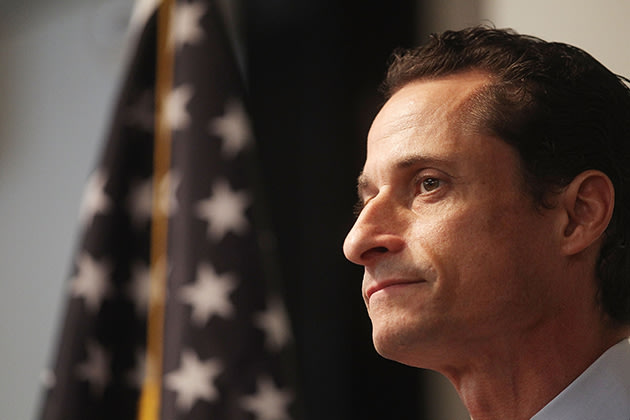 Anthony Weiner in 2011 (Mario Tama/Getty Images)
![[ Back to EurekAlert! ]](http://www.eurekalert.org/images/back2e.gif) Public release date: 10-Apr-2013
Public release date: 10-Apr-2013 Share ]


